
Tommy Tycho MBE
Story by Andrew L. Urban
Photos by Walter Glover
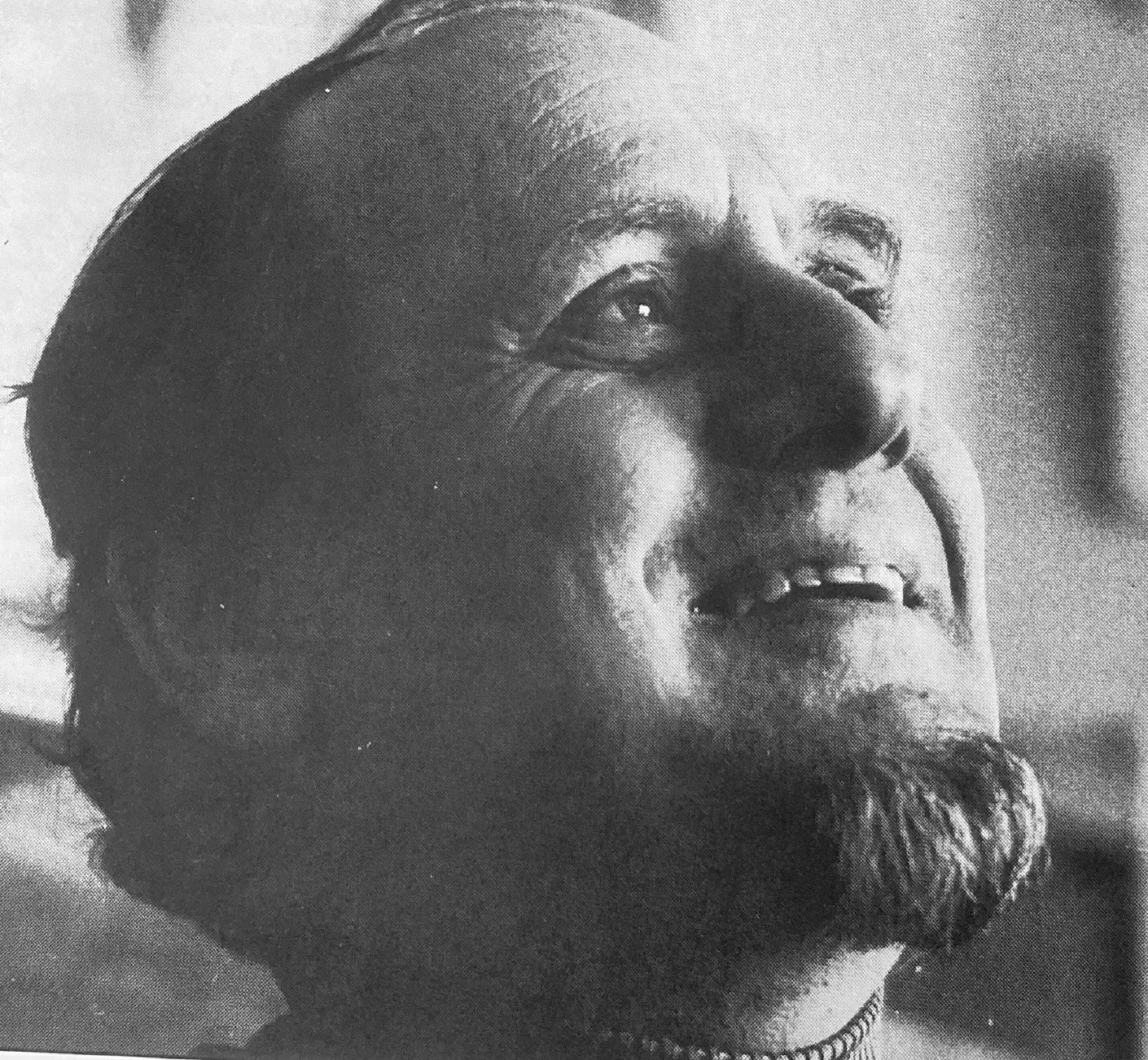
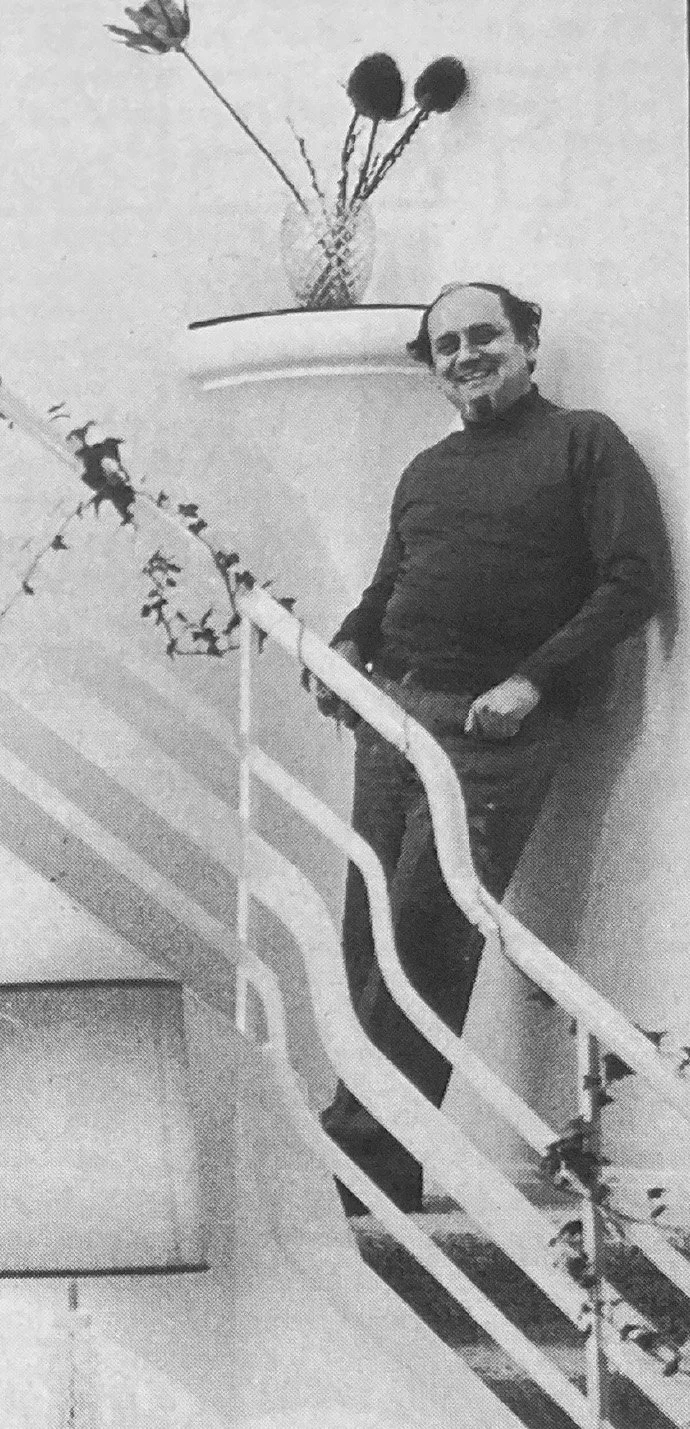
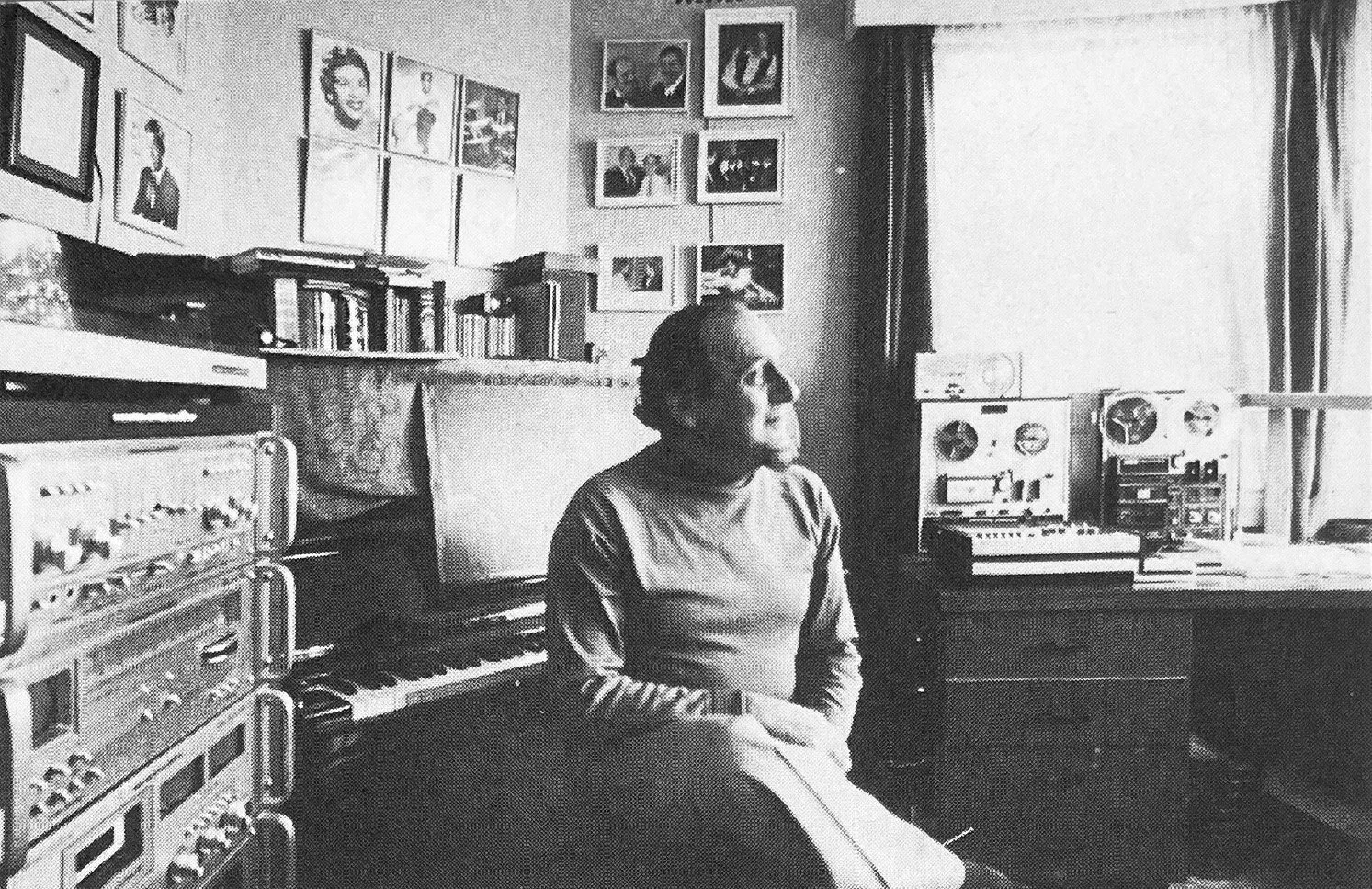
In his Seaforth Studio.
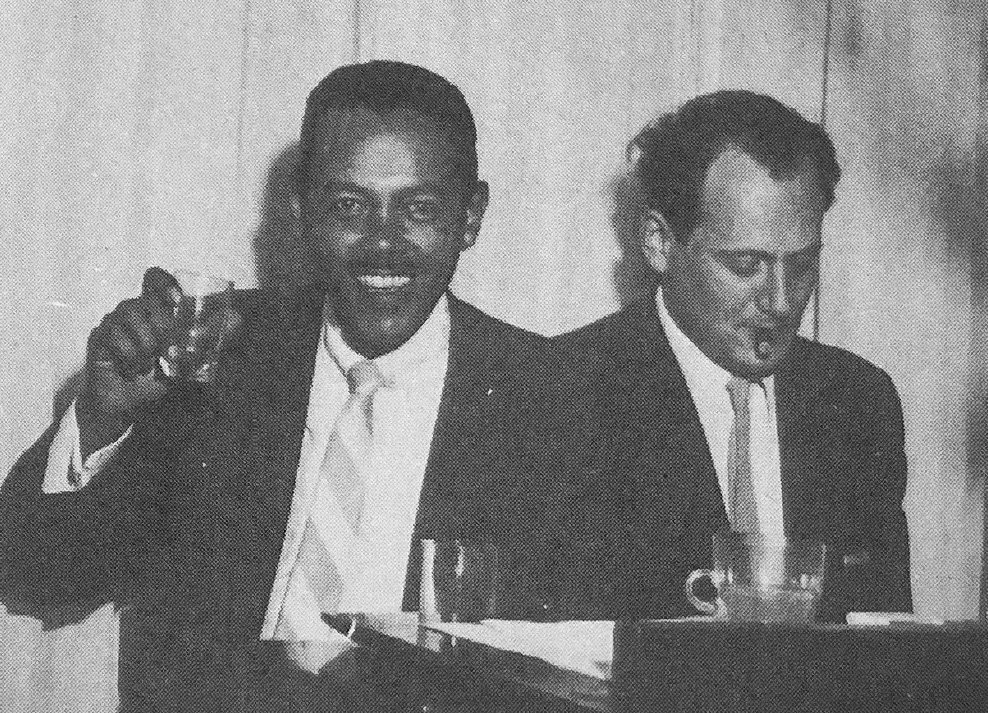
American jazz/pop singer and band leader Billy Eckstine with Tommy Tycho at the piano. Hits included ‘Everything I have is Yours’ and ‘Fools Rush In’ (Where Angels Fear to Tread).
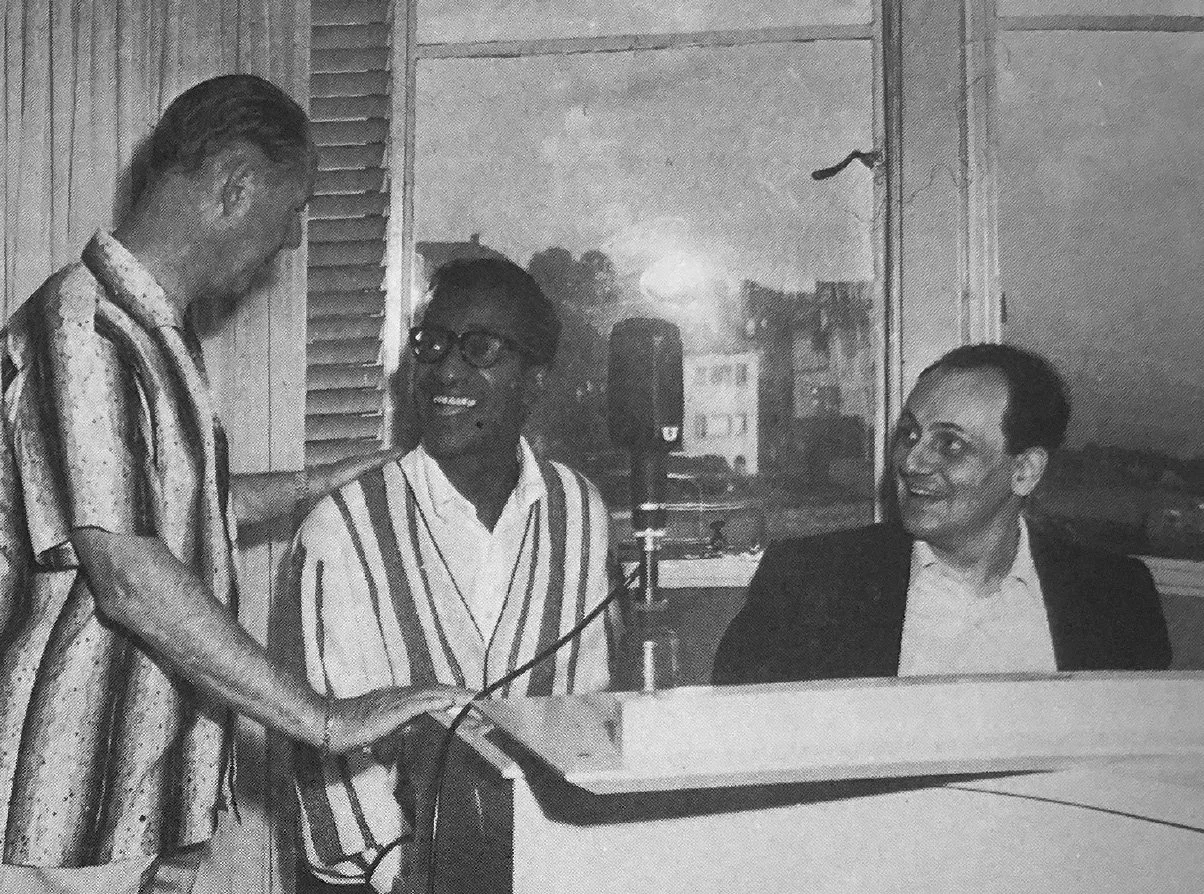
With radio quizmaster & producer Jack Davey and American entertainer Sammy Davis Jnr.
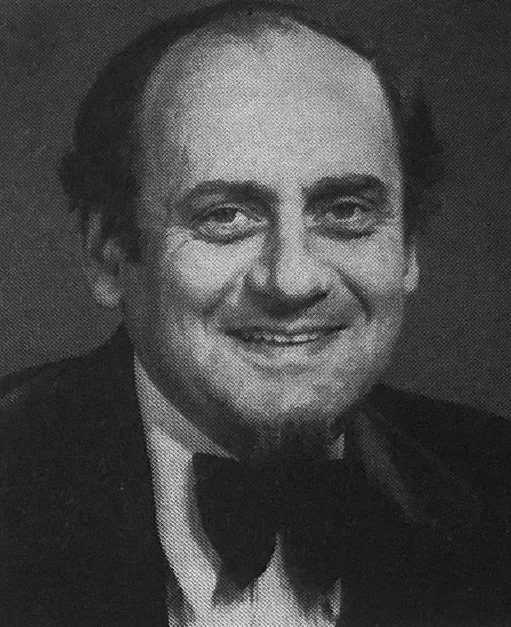
Stop Press Encore exclusive: Tommy Tycho has accepted the invitation by the Committee to become Patron of the Variety Artistes Mo Awards Guild, we were informed at time of going to press. The official welcome is being planned as a Celebrity Lunch in the near future with one of the world’s greatest entertainers to be present – a man with whom Tommy has worked – probably in October. The Mo Guild constitution allows for two Patrons, but there has only ever been one: the late John Campbell.
A surprising new facet of Tommy is emerging in this, his 35th year as a professional musician. It especially surprises Tommy himself. For the first time, he is becoming a ‘personality’, a performer who not only plays music but communicates with words on stage, as an extension to his musical activities. This was superbly demonstrated earlier this year when at a Town Hall concert, he virtually compered the show, while at the same time conducting the orchestra. (I don’t mean he did both simultaneously.)
He is of course aware that this expansion also heightens the need for ever improving his capabilities. As he reminds himself almost daily, he is only as good as his last show, and the next one must be better. Though he is no longer ‘just a musician’, the musician inside him seeks equal recognition – and gets it.
‘a most respected musician’
There is no doubt that Tommy is a most respected musician, but as well as his talent he has generated in those who know him a great friendship. That such respect and friendship are fully interlocked contributes to making him a great asset to Australian music and entertainment.
Of his 35 years of music making, Tommy has spent 28 of them in Australia. Now at the age of 51, it seems the horizons are broadening with America starting to hear the first strains of a Tycho orchestra playing Tycho arrangements on several hundred ‘Beautiful Music’ FM radio stations across the country. And that’s just a start. This month, his music will impress millions as the Julie Anthony Gold Coast Special airs on 50 tv stations in just about as many States.
Between now and the end of the year, Tommy will have been intrinsically involved with the music on 6 Ronnie Corbett tv specials, more Julie Anthony Specials A Perry Como Special, one, maybe two movie scores and at least one major Opera House Concert, as well as another huge batch of tapes for the American FM radio market.
At the same time, 1979 marks Tommy’s first (and probably only) venture into the commercialisation of his name, with the signing of an agreement with Superscope Australia Pty Ltd to endorse their Marantz range of quality hi-fi gear, and the Pianocorder products.
‘I am really knocked out with the Marantz equipment,’ he says, eyeing a superb rack of systems in his studio at home. ‘I have never endorsed any product before, and I don’t think I will again. But both Marantz and the Pianocorder are things which I can relate to, appreciate and be happy to endorse.’ That agreement is not limited to one year, and Superscope have every reason to be pleased with themselves for securing Tommy’s services.
‘it is easy to understand why he has become known as The Maestro’
When you look at Tommy’s musical accolades, it is easy to understand why he has become known as The Maestro. His fellow musicians (and thousands of others) look up to him as a composer, as a pianist, as an arranger, as a conductor, as a musical director and innovator – and of course as a friend. Born in Budapest, Hungary on April 11, 1928, he wrote his first composition at the age of 10, played piano in public the following year, and was supporting his widowed mother and his sister by playing in bands when he was 18. Already he was becoming something of a star: at the age of 19, Tommy Tycho refused the job of musical director for the Hungarian broadcasting service. It wasn’t the arrogance of youth (he was painfully shy as a youngster, actually) but simply that he didn’t want to be tied down so early. Besides, it was 1947, Hungarian politics were turning ominous, and his intuition turned out to have been fortunate. In 1948, he was on his way to Tehran to play piano with a band recruited by a fellow Hungarian musician for a one year contract! They stayed for 3.
It was there that he met Eve, during a studio session for a record she was to make as a bilingual singer, and they married in 1950, a year before he came to Aust alia. In fact, he had applied for a visa to America as well, but by one of those twists of fate, the Australian visa arrived first, and Tommy and Eve had their minds made up for them.
There is no doubt that had Tommy gone to America, he would have made his career equally significant in America’s music world.
He may have had second thoughts about that job with Hungarian radio on his arrival here, when struggling for his union card he was forced by lack of funds to take a job as a storeman at David Jones. It sustained him for 2 years, until the union card came through and Tommy auditioned for the ABC. That was all he needed. J. Wilbur (a respected band leader of the time) was impressed with his playing and sight reading ability, and the Tycho career was launched. A year later he had his own 9 piece band on radio, and had played as a duo with Glen Marks, regarded then as the ‘star’ pianist, and built a huge following.
‘his name was made in music circles’
(One incident Tommy recalls in the early days after he began to play piano concerns the celebrated Johnny Ray. Tommy got an urgent call one day from Wally Norman (then band leader, now agent) asking him if he could fill in for an ill pianist on the last of the Ray concerts at the Stadium. Tommy agreed and rushed down, only to walk out onto the bandstand amidst thousands of people to face a huge book which he had to sight read. He recalls being pretty nervous, but he cut it so well his name was made in music circles as a first rate pianist.)
By the time tv came to Australia in 1956, the year he became an Australian citizen, only 2 or 3 years after Tommy began his professional Australian career, it was inevitable that he should be invited to contribute his talents to the new medium. He joined Channel 7 and stayed with them for 15 frantic, productive and reputation-earning years. He moved from band pianist to leader, to Channel Musical Director in a manner usually described as ‘meteoric’, putting in umpteen hours daily in arranging and composing on the run, rehearsing and performing, sometimes as many as 7 or 8 shows every week. And in those early days, much of the work was live, in cramped and difficult situations.
During these years, Tommy of course, worked alongside thousands of performers and musicians, local and otherwise, and also became a musical drawcard on television. There was hardly a show which didn’t list Tommy’s name in the credits
By 1971, he had decided to take a breather – well earned, no doubt. Tommy went into mental hibernation for a while to re-emerge on the concert platform with a series of concerts under the 2CH banner, paying tribute to the great names of Porter, Rogers, Hammerstein, Hart, Gershwin.
These led to other concert work, such as the Big Band tributes, and to the exposure of Tommy’s musical diversity when playing for artists as diverse as David Gray and Peggy Lee.
‘he is a marvellous man of music’
A personal friend for some 24 years, David has worked with Tommy on some 20 or more concerts, some of them produced by David himself last year. ‘In a phrase,’ says David, ‘he is a marvellous man of music. If I ever have any major musical work to do, he is the man. Tommy is one of the very few men to really understand the type of music I sing… light classics, operetta, musical comedy.’ At the same time, Peggy Lee (whose musical idiom is somewhat different) can feel totally free to express herself and sing with ‘more feeling’ when working with Tommy, as she did earlier this year. She told me by phone from her Los Angeles home: ‘It’s a wonderful feeling to work with a man such as Maestro Tycho. I never had any doubts at any time about the orchestra behind me. I knew I was in good hands. It was a great honour and a great pleasure to work with him, and I hope it’s not the last time. I’m sure it won’t be.’
The man responsible for bringing Peggy Lee and Tommy together on this tour was Lyn Rich, Tommy’s personal manager for the last 18 months. Lyn, who first met Tommy playing drums for him 5 years ago, has regarded their relationship as one of friendship first. But his respect for and dedication to Tommy are thoroughly professional. They have become more than client-manager, with Tommy a shareholder and director in the Network company, which also provides music coordination services to tours, concerts, tv, recording and radio projects. It was on the first major international project last year, The Fabulous Flintstones, that Tommy worked with Dominic Frontiere, the Hollywood composer. ‘It is indeed an honour,’ Dominic says, to have worked with Tommy, who has contributed such wonderful music for the entire world to hear.’ And Dominic will be back for more major music projects soon.
‘a wonderful musician and a gentleman’
Lyn, when in American recently, meeting with Peggy Lee and talking to music publishers in America, met a man, quite by chance, called George Greely. Greely is a concert pianist of some renown, a respected composer and a major distributor of FM music. He had worked with Tommy in Revue 61 and Revue 62 at Channel 7: ‘I admired and respected him then, as I admire and respect him now. He has grown in stature throughout the world, and will continue to do so, because he is a wonderful musician and a gentleman.’
It was when Lyn mentioned Tommy’s name that doors opened for Australian music exports to America. ‘The opportunity arose, and Tommy’s name made it possible. Over the next two years, the world will find out about Tommy,’ Lyn says, ‘with people like Frontiere telling film makers, “yes, go to Australia, they can do it, and do it well”.’
At his comfortable but unassuming home in Seaforth, Tommy enjoys rare domestic bliss. He and Eve have never had a quarrel, they live in a lifestyle of easily mixed Australian/European comfort, and have a budding actress daughter, Vicky, who will soon be married. In fact, it is a surprisingly unbohemian home, with its large swimming pool, fine furniture and a Commodore saloon in the drive.
On the other hand, Tommy’s studio at the front of the house overlooking the tree-lined street is usually buzzing – the phone rings and it could be a request to appear at a Command Performance or a call for assistance from one of hundreds of artists on the club circuit. He is always ready to help and is always reliable. He has donated arrangements to shows for charities (such as the Mo Awards) worth thousands of dollars.
And he has helped artists with not only some superb arrangements, but by giving his time, to suggest alterations and additions to the structure of their shows. Barry Crocker, who uses Tommy’s arrangements a lot, both in concert and on records, regards him first and foremost as a friend. ‘He’s a very generous man. Not just in monetary terms, but with his time. I’ve known him since 1962 and always think of him a friend – but of course, that also reflects in his music.’
‘he does it all so well’
From a musician’s viewpoint, Tommy is equally impressive. Billy Burton sees Tommy as ‘a very musical person… he does it all so well. There aren’t too many guys who can write classical things and turn around and do an equally great job with a piece for the Daly Wilson Big Band. He covers a tremendous amount of ground.’ Billy and Tommy, bandleaders both for many years, (Billy has himself had 32 years as a pro), have always had ‘a healthy respect’ for each other, even in the days when they were more-or-less rivals. It was only recently, the last few years, that workloads and circumstances have allowed the two men to work together on stage. For instance, you have to see the Tycho/Burton duet on piano and trumpet in ‘One for my baby’ to realise the extent of the rapport between them musically - and mentally. ‘We have the same ideals,’ comments Billy. ‘And another thing,’ Tommy doesn’t play ‘arranger’s piano’.” There’s even talk now of an album together.
At 6 o’clock on October 22, 1976, Digby Wolfe walked into the Green Room at the Opera House to surprise Tommy and present him with the book of ‘This is your Life’. The subsequent programme reminded Tommy of his audition for ABC Radio Music Supervisor Werner Baer, of his first ‘Sydney Tonight’ tv show directed by Frank Strain, old friends Gabor Reeves ( an expatriate Hungarian musician who was the first of Tommy’s friends here) David Gray, Claire Poole, Boof Thomsen, Carol Raye, Julie Anthony… a half hour to end with Tommy playing Gershwin’s Rhapsody in Blue, which was the first jazz tune he heard as a child pianist, and the one that turned his musical head.
Two years ago, Tommy was awarded the MBE for his contributions to music, and treasures this highly. ‘Look, it is a symbol of recognition, something which is really an honour for me.’
Happiest when working at full steam, Tommy still needs the assurance of being in demand. While not paranoid about it, his morale suffers if a week goes by without a new assignment coming up.
‘an easy charm’
Lyn, in his capacity as personal manager, plays most things very close to the chest, informing Tommy only once the deal is set. On the other hand, Tommy has a great sense of humour, much of it in the European mould, and an ability to be self-critical.
There is an easy charm about Tommy, an openness and genuine affection for all music and all people. His life, first as something of a child prodigy in a comfortable middle-class home, then a brief period as a victim of his Jewish background (despite being brought up as a Methodist) before making an impact as a talented musician, is filled with incidents and anecdotes. He has used his given talents, and he has the honesty to know he is at a stage of his life when he cannot afford a single miscalculation, a single ‘bummer’. Each upcoming project must surpass the last. It is a daunting task, yet we all know and anticipate that he will do it.